
If you spend any time around digital marketing, you have probably noticed the alphabet soup: SEO, AEO, GEO. Each one comes with its own checklists, its own experts and its own agencies promising to master it. It is easy to walk away thinking you need three separate strategies, three budgets and three teams.
You do not. These three terms describe one bigger visibility challenge: being discoverable and trusted wherever your customers search, ask and compare.
In this guide, we break down what SEO, AEO and GEO each mean, where they overlap, and how to build a single practical approach that covers all three.
SEO, AEO and GEO: Three Terms, One Bigger Challenge
SEO, AEO and GEO are often discussed as if businesses need completely separate strategies. In practice, there is significant overlap.
Strong technical foundations, useful content, clear expertise, consistent brand information and authority still matter in all three. What is changing is where that information can be surfaced: traditional search results, answer engines and generative AI experiences.
That is why the better question is not, “Which acronym should we optimise for?” It is: “Can our business be discovered and trusted wherever our customers are looking for answers?”
Let us look at each term first, then at how they fit together.
What Is SEO?
SEO, or search engine optimisation, is the practice of improving your visibility in traditional search results such as Google. It is the oldest of the three and still the foundation for the others.
A solid SEO programme usually covers:
- Technical health: fast loading pages, clean site structure, mobile-friendly design and correct indexing.
- Content: pages that match what people are actually searching for, written clearly and kept up to date.
- Authority: quality backlinks, mentions and signals that your site is a credible source.
- Local presence: accurate business listings, reviews and map visibility for location-based searches.
SEO is not going away. Millions of high-intent searches still happen on Google every day, and those results still send valuable traffic. Our overview of AI SEO services explains how modern SEO combines these fundamentals with AI-assisted analysis. If you want to understand how newer methods compare, read AI SEO vs traditional SEO.
What Is AEO?
AEO, or answer engine optimisation, is about structuring useful, authoritative information so answer engines can understand and surface it.
Answer engines include features like featured snippets, “People also ask” boxes, voice assistants and AI-generated summaries. Instead of returning a list of links, they try to deliver a direct answer. To be chosen as the source of that answer, your content needs to be easy for machines to read and easy for people to trust.
Practical AEO tactics include:
- Writing clear, direct answers to specific questions near the top of a page.
- Using headings that mirror how people actually phrase questions.
- Adding structured data (schema markup) so search systems understand what a page is about.
- Including FAQ sections with concise, accurate responses.
- Showing real expertise, with named authors, sources and up-to-date information.
AEO also overlaps with the way people search by voice. If that matters for your audience, our voice search SEO guide for India covers it in depth. For a fuller walkthrough, see how to become the AI’s trusted source with AEO best practices.
What Is GEO?
GEO, or generative engine optimisation, means optimising your brand and content for discovery inside generative AI experiences. These include AI chat assistants, AI-generated search summaries and other tools that compose an answer rather than simply retrieving a page.
When someone asks an AI assistant, “Which agency should I hire for SEO?” or “What is the best way to track website leads?”, the assistant draws on what it has learned and what it can retrieve, then names a handful of sources or brands. GEO is about increasing the chance that your brand is one of them, and that it is described accurately.
GEO tends to focus on:
- Brand clarity: consistent, factual descriptions of who you are and what you do across your website and other platforms.
- Citable content: original data, clear explanations and expert commentary that others, including AI systems, can quote.
- Third-party mentions: coverage on reputable sites, directories, review platforms and communities.
- Entity signals: making it obvious that your business is a real, established name in a specific field.
To understand the mechanics, read how AI models decide which sources to cite. For a market-specific view, see GEO for Indian businesses, or explore our GEO and AEO services if you want hands-on support.
SEO vs AEO vs GEO at a Glance
The differences are easier to see side by side.
- SEO: focuses on traditional search results. The goal is to earn rankings and clicks from engines like Google.
- AEO: focuses on answer engines and direct-answer features. The goal is to be the clear, trusted answer to a specific question.
- GEO: focuses on generative AI experiences. The goal is to be mentioned, cited and described accurately when AI composes a response.
The surfaces are different, but notice how often the same inputs appear. Good content, clear expertise and credible signals feed all three.
Why These Three Increasingly Overlap
The most important thing to understand is that these are not three separate marketing worlds. They are increasingly layers of the same discipline. Here is where the overlap is strongest.
Technical Foundations
A site that is slow, confusing or hard to crawl struggles in every environment. Search engines need to index your pages. Answer engines need to parse them. AI systems need to retrieve them reliably. Clean structure, fast performance and proper markup help all three.
Useful Content
Content that genuinely answers real questions is the common currency. A well-written page can rank in search, supply the direct answer for a snippet and give a generative system something worth citing. Thin, repetitive content does none of these things well. Our guide to AI content optimisation shows how to make your pages more useful and easier to find.
Clear Expertise
Search engines reward experience and expertise. Answer engines prefer sources that appear knowledgeable. AI systems tend to reference content that reads as reliable and specific. Named authors, real examples and accurate detail help in every case.
Consistent Brand Information
Your name, services, location and descriptions should match across your website, business profiles and social pages. Inconsistency confuses search engines and gives AI systems conflicting information to work with.
Authority
Backlinks, press mentions, reviews and industry recognition build trust over time. That trust influences rankings, answer selection and the likelihood of being named in a generated response.
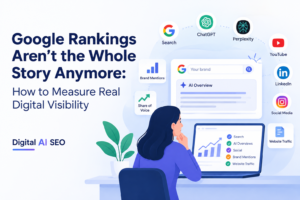
Because the foundations are shared, work done for one channel usually helps the others. This is also why the rankings alone no longer tell the full story, a theme we explore in why Google rankings aren’t the whole story anymore.
What Is Actually Changing
If the fundamentals stay the same, what is different?
The place where information appears. A decade ago, nearly all discovery meant a list of ten links. Today, a customer may see a summary at the top of a results page, hear an answer from a voice assistant, or ask a chatbot for a recommendation. Our look at Google AI Overviews and the zero-click shift in India shows how much behaviour has already moved.
The way success is measured. Clicks and rankings remain useful, but they miss a lot. Being named in an AI answer or chosen for a snippet may not produce a click, yet it still shapes perception and consideration.
The importance of being understood. Machines now interpret meaning rather than just match keywords. Clear structure, precise language and consistent facts help systems understand who you are and when to recommend you.
Common Mistakes to Avoid
As these terms become popular, businesses can easily go wrong. Watch for these pitfalls:
- Treating them as separate projects. Splitting budgets and teams across three silos leads to duplicated work and mixed messaging.
- Chasing tricks. There is no shortcut to being cited by an AI system. Quality, clarity and credibility are what hold up over time.
- Neglecting the basics. Many sites chase new tactics while ignoring slow pages, broken links or unclear service descriptions.
- Ignoring brand mentions. Authority is built off your own site as well as on it.
- Measuring only rankings. A narrow report hides how you appear in answers, maps, reviews and AI responses.
A Practical Framework: One Strategy, Three Surfaces
Instead of managing three acronyms, build one visibility strategy and check how it performs on each surface.
Step 1: Fix the Foundations
Audit your site for speed, mobile usability, crawlability and structured data. Make sure core pages load quickly and are easy to navigate.
Step 2: Create Genuinely Useful Content
Identify the questions your customers ask at each stage of their decision. Answer them clearly, with real expertise and up-to-date detail. Put the most direct answer near the top, then add depth below.
Step 3: Make Your Expertise Visible
Show who is behind the content. Add author profiles, case studies, testimonials and credentials. Make it easy to see why your business can be trusted.
Step 4: Keep Your Brand Information Consistent
Review your listings, profiles and descriptions across platforms. Make sure your business name, services and key facts are accurate and aligned.
Step 5: Build Authority and Mentions
Earn coverage, reviews and references from credible sources in your field. Contribute expert commentary and share original insights that others want to cite.
Step 6: Measure Discovery, Not Just Rankings
Track organic visibility, snippet and answer presence, AI mentions, local visibility, reviews and conversions together. You can start by checking your AI presence with our AI visibility tool. For a view of how paid and organic channels fit with these efforts, read how SEO, AEO and Google Ads work together in 2026.
Ask a Better Question
The most useful shift is a change in wording. Instead of asking:
Which acronym should we optimise for?
Ask:
Can our business be discovered and trusted wherever our customers search, ask and compare?
That question keeps the focus on the customer rather than the label. It leads you to strengthen your foundations, publish useful content and build credibility, which is exactly what helps in search results, answer engines and generative AI at the same time.
Frequently Asked Questions
1. What is the difference between SEO, AEO and GEO?
SEO improves your visibility in traditional search results such as Google. AEO structures useful, authoritative information so answer engines can understand and surface it. GEO optimises your brand and content for discovery inside generative AI experiences. They target different surfaces but share many of the same foundations.
2. Do I need a separate strategy for each one?
Usually not. Because technical quality, useful content, clear expertise, consistent brand information and authority support all three, most businesses are better served by one integrated visibility strategy, with each surface reviewed separately.
3. Is SEO still worth investing in?
Yes. SEO remains the foundation. Strong rankings, healthy technical performance and quality content still drive significant traffic, and they support your chances of appearing in answer engines and AI-generated responses too.
4. How can I tell if my brand appears in AI answers?
Ask AI assistants and search features the kinds of questions your customers would ask, then note whether your brand is mentioned or cited and how it is described. Repeat this regularly and compare the results with competitors.
5. Where should a small business start?
Start with the basics: a fast, well-structured website, clear service pages, accurate business listings and helpful content that answers real customer questions. Once those are in place, add structured data, FAQs, reviews and third-party mentions to strengthen all three areas together.
Final Thoughts
SEO, AEO and GEO are not three competing worlds. They are three views of the same goal: making your business easy to find, easy to understand and worth trusting. The surfaces will keep evolving, but the fundamentals of quality, clarity and credibility will keep paying off.
The goal is simple: be discoverable where your customers search, ask and compare. If you would like help turning that into a practical plan, get in touch with the Digital AI SEO team for a visibility review.